A full C-suite costs a payroll most owners can't justify, and advice without a rhythm to enforce it never sticks. Sixteen specialist executives, configured to your business, meet on a set weekly and monthly rhythm, hold your whole company in one room, and argue before they hand you a recommendation. You run with the discipline of a company far larger than yours, without the payroll. You make every final call. You stop making it alone.
Bring a real decision you face right now. I run it through your full C-Suite, live, on your actual situation. 30 minutes. No card, no obligation, no pricing games.
The bottleneck
Every hard question lands on your desk. The pricing call. The hire. The launch date. The difficult client. The cash decision. You make each one, often alone, often fast, often at the end of a long day.
You are good at this. Good enough to build a business which works. And this is the trap. The better you get at deciding everything, the more everything waits for you to decide. The business grows to the size of your own attention, and then it stalls.
Look at what surrounds you. A bookkeeper, not a CFO. A freelancer running ads, not a CMO. A lawyer you call after something already broke. None of them sit in the same room. None of them challenge each other. None of them hold your whole business at once and tell you the marketing plan will not survive the cash position. You carry the integration in your head, because no one else holds the full picture.
The real problem
Open your feed. AI agents, prompt packs, another assistant, another course, cheaper every month. The market floods you with answers. And your hardest problems have not moved.
Answers were never your bottleneck. A decision made without challenge carries your blind spots inside, and every owner has them. The strong closer who avoids the numbers. The visionary who starts more than they finish. The operator who polishes the product while sales go quiet. You already know your pattern. Knowing does not stop the pattern, because in the moment of the decision, no one stands there to name what you are steering around.
Deciding alone has a name: decision isolation. And more AI answers make the problem worse, because faster answers accelerate unchallenged decisions.
This explains why the tools you tried left your ceiling exactly where you found them. None of them failed because you lacked discipline or intelligence. They failed because they treat symptoms of decision isolation, and none of them addresses the cause.
Why nothing you tried has fixed this
Each one is rational. Each one treats a symptom. The failure was the diagnosis, not your effort.
Answers the question you type. Holds no view of your business, no memory of your priorities, and agrees with you by default. You get faster output on the same unchallenged thinking.
Gives you knowledge and leaves the applying to you. Alone. Later. Knowledge was never the constraint, and the half-finished courses on your drive already told you so.
Knows you well, meets you twice a month, and rarely knows finance, legal, marketing, and operations at depth all at once. Your decisions happen daily, across every domain.
Real challenge, one domain each, four figures a month each. And still no one integrates. You remain the only person holding the whole picture together.
Only one thing addresses decision isolation at the source: a full executive team, holding your entire business in one room, arguing in front of you before you commit. Until now, one kind of company had this. The kind with a payroll of two million a year for the C-Suite alone.
Side by side
Not a feature list. The four things that actually determine whether a decision gets made well, plus what it costs you.
| Chatbot / prompt pack | Online course | Human coach | Fractional executive | AI C-Suite Powerhouse | |
|---|---|---|---|---|---|
| Domains covered at once | One at a time, whatever you ask | One topic, fixed | One relationship, generalist | One domain, deep | Sixteen, same room |
| Challenges your thinking | Agrees by default | No interaction | On their specialty | On their domain only | Roles challenge each other, and you |
| Remembers your business over time | Blank every session | Not applicable | Yes | Yes | Yes, one configuration, every role |
| Integrates the whole picture | No | No | Rarely, outside their training | No, each hired and paid separately | Yes, one CEO layer holds it all |
| Approximate monthly cost | $20–$200 | One-time, a few hundred | $500–$3,000 | $3,000–$20,000, per domain | €297 + IVA, all sixteen domains |
Coach and fractional executive ranges are approximate 2026 market figures and vary by scope and region. Verify current rates before relying on them.
See the difference
Not an answer. A debate, ending in a recommendation you challenge and decide on.
The system
Sixteen specialist executives across every domain your business touches, from finance and revenue to people, legal, innovation, supply chain, investment, turnaround, and your own productivity. A CEO Module orchestrates them all. Configured to your business and to the way you make decisions. They advise, they challenge, and they keep your attention on revenue first.
One orchestration layer routes every question to the right specialists, hears them out, and synthesises a single recommendation. No handoffs, no lost context, no managing who to ask.
Your onboarding builds a configuration document covering your ventures, your numbers, your decision style, and where you want to be held accountable. Every session starts from your reality.
Weekly focus, Friday review, monthly portfolio review, quarterly strategic diagnostic. The rhythm turns advice into progress you keep. Without rhythm, every tool decays into a toy.
The system watches for the most common owner failure: polishing product while selling stops. When your time drifts from what earns, your C-Suite pushes back and says so plainly.
The full bench
Sixteen executives, ninety specialist skills beneath them. Open any role to see exactly what it covers.
The complete system, exactly as built. Sixteen advisory roles, 96 sub-skills, one execution agent per sub-skill, a cross-role execution bench, and the operating rhythm underneath. Nothing on this diagram is a mock-up.
The rhythm
Your executive team frames the three decisions this week which matter, in priority order, revenue question first.
Bring the real call. The relevant executives weigh in together, disagree where they should, and hand you a recommendation with the reasoning visible.
Review of what moved and what did not, against the plan you set. Accountability you asked for, applied.
Numbers, ventures, time allocation. Where your attention pays and where you leak hours quietly.
A full reset of priorities across everything you run. One business or five, one view of your time and your cash.
Before you book, read this
This market is full of hype, and you have every reason to distrust a page like this one. So here is the part most pages leave out.
The system advises and challenges. Nothing executes behind your back, nothing decides for you. Every final call is yours, on purpose, by design.
AI gets things wrong. The design assumes so. Specialists challenge each other rather than handing you one unexamined answer, every recommendation shows its reasoning, and you are expected to push back. Treat output the way you would treat a sharp human advisor: seriously, never blindly.
If you want a tool for writing posts, buy a cheaper one. This exists for consequential decisions: pricing, hiring, cash, launches, focus.
If you want an executive team which tells you what you want to hear, this is the wrong product, and I would rather you find out on this page than after buying.
Who built this
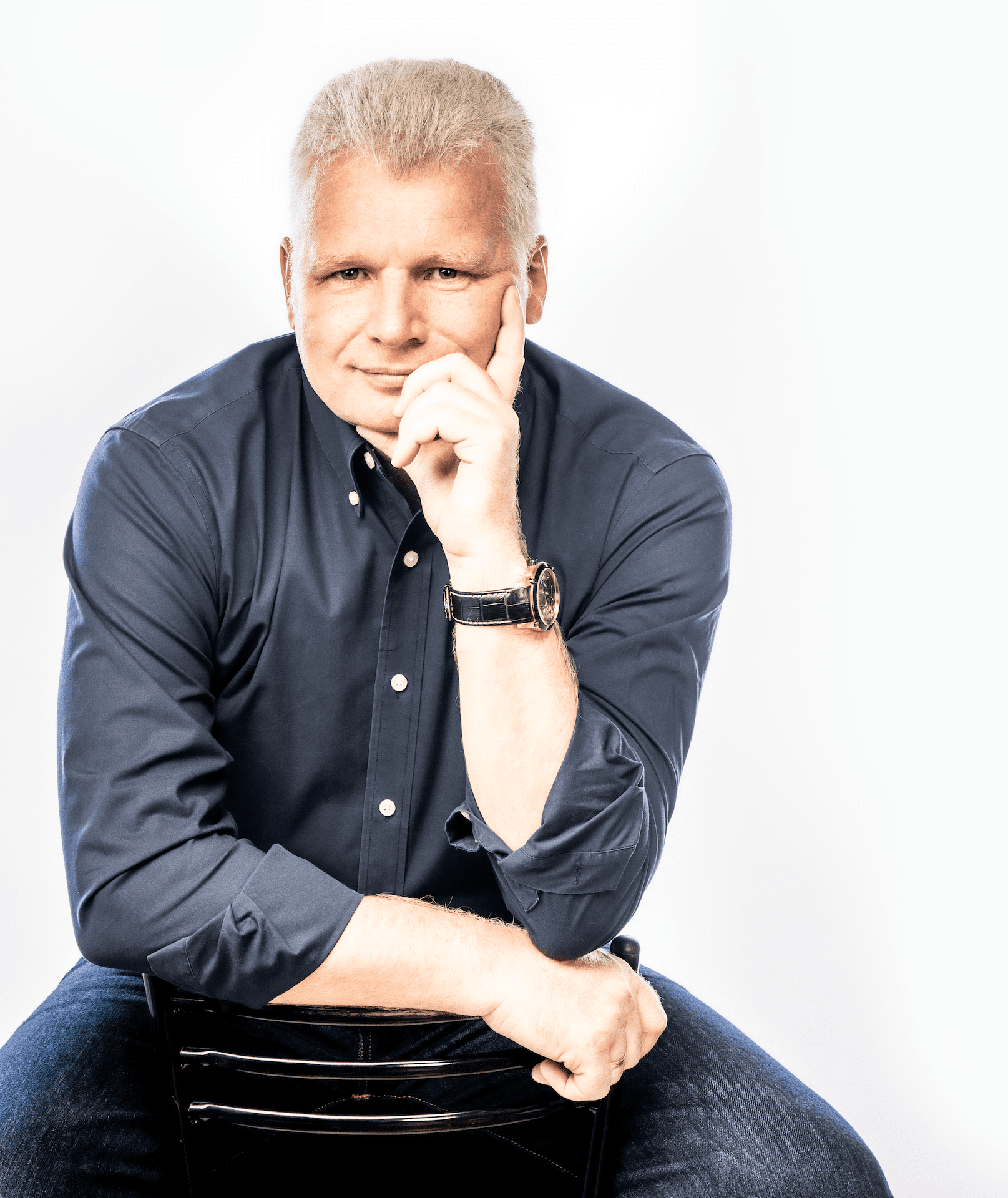
Erwin de Grave
Founder, EdG Holding 1315 SL · Spain
I run several businesses, and I built this because I needed the thing myself. I was the bottleneck in my own companies. Every call landed on me, I carried the whole picture in my head, and I lost hours to decisions no one was there to challenge.
So I built the executive team I never hired. A system which holds all of my ventures at once, argues with me before I commit, and keeps my time pointed at what earns. I run my own portfolio through the exact system you would buy, every week. Your demo runs on my live build, not on a pitch deck.
I sell nothing here I do not run myself. No team of closers, no funnel of upsells, no anonymous "AI company." One named operator, one product, and a licence with my company name on the front page. If your demo shows you nothing, you keep the 30 minutes of free thinking and we part on good terms.
How you start
You bring a real decision. I run your full C-Suite on your actual situation, live. You see the debate before you spend a euro.
A working session where we build your configuration: your ventures, your numbers, your decision style, your accountability preferences.
I install your private instance, load your configuration, and walk you through your first weekly focus. Nothing for you to set up.
What one fractional executive already costs
These are approximate 2026 US market retainer ranges for a single domain, part-time. Verify current rates before quoting them, markets move.
$3,000–$12,000/mo
One domain, part-time, one specialist.
$4,000–$20,000/mo
One domain, part-time, one specialist.
€297 + IVA / month
Sixteen domains, every session, every week you need them, for less than a single fractional CFO alone, before you even add a CMO.
Straight answers
Fit check
One next step
Book a live demo and watch your full C-Suite take your real decision apart in front of you. 30 minutes on your actual situation. If the session earns its place, we talk installation. If not, you leave with sharper thinking and no follow-up pressure.
Book your live demoNo card. No obligation. One named operator on the other side.